


Quantum computing has moved from science fiction to laboratory reality, and the cybersecurity community is paying close attention. While traditional computers process information in bits—ones and zeros—quantum machines leverage qubits, which can exist in multiple states simultaneously. This fundamental difference allows quantum computers to solve certain mathematical problems exponentially faster than classical systems. That power promises breakthroughs in drug discovery, logistics optimization, and climate modeling. However, it also poses an existential threat to the encryption protocols that currently protect everything from banking transactions to classified government communications.
The question facing security professionals today isn’t whether quantum computing will impact cybersecurity—it’s when, and whether organizations can prepare in time. With estimates suggesting that cryptographically relevant quantum computers could emerge within the next decade, understanding this threat landscape has become essential for anyone responsible for digital security.
Understanding the Quantum Threat Landscape
To grasp why quantum computing matters for cybersecurity, consider how modern encryption works. Most secure communications rely on public-key cryptography, which depends on mathematical problems that are easy to solve in one direction but practically impossible to reverse. RSA encryption, for instance, bases its security on the difficulty of factoring large prime numbers. Classical computers would need thousands of years to crack a properly implemented 2048-bit RSA key.
Quantum computers change this equation entirely. In 1994, mathematician Peter Shor developed an algorithm that could theoretically factor large integers exponentially faster than any known classical method. Once quantum computers become powerful enough to run Shor’s algorithm at scale, current public-key encryption becomes obsolete overnight. According to research from the Global Risk Institute, quantum computers capable of breaking RSA-2048 could emerge as early as 2030, with some experts predicting even sooner.
The threat extends beyond RSA. Elliptic curve cryptography, which secures Bitcoin transactions and many mobile communications, faces similar vulnerability. Even symmetric encryption standards like AES aren’t immune, though they require only doubled key lengths to maintain security—a relatively straightforward fix compared to replacing entire public-key infrastructures.
The Harvest Now, Decrypt Later Problem
Perhaps the most immediate concern isn’t future quantum attacks, but present-day data collection. Adversaries are already intercepting and storing encrypted data with the expectation that quantum computers will eventually decrypt it. This “harvest now, decrypt later” strategy means sensitive information transmitted today could become vulnerable within years, even if quantum decryption happens decades from now.
Intelligence agencies, healthcare organizations, and financial institutions must consider whether their data retains sensitivity long enough to warrant quantum-resistant protection today. A diplomatic cable that seems secure under current encryption standards could expose sources and methods if decrypted in 2040. Similarly, medical records and genetic data maintain value across entire lifetimes, making them prime candidates for immediate post-quantum cryptographic migration. As artificial intelligence transforms healthcare and expands the volume of digital health data, protecting these records with quantum-safe encryption becomes increasingly critical.
Post-Quantum Cryptography: The Defense Strategy
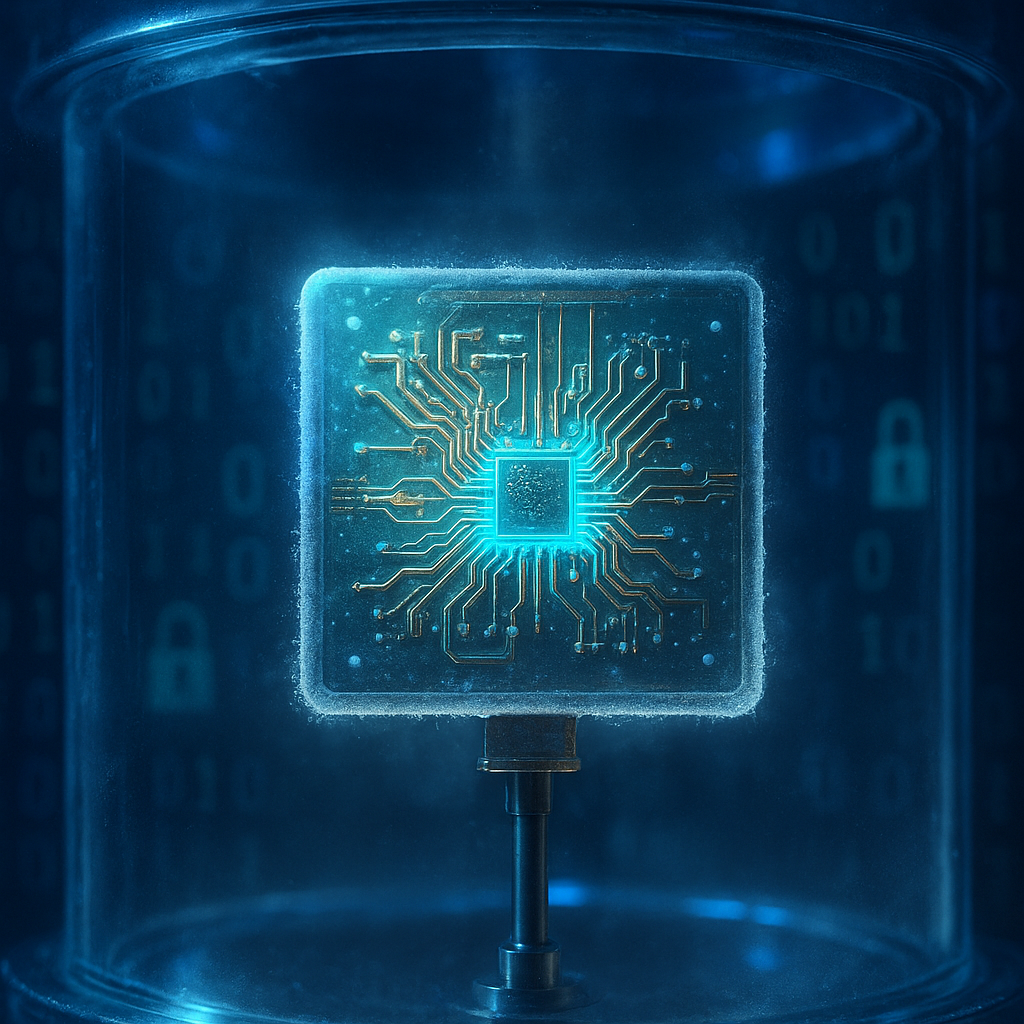
The cybersecurity community isn’t waiting passively for quantum supremacy. Since 2016, the National Institute of Standards and Technology (NIST) has been evaluating quantum-resistant cryptographic algorithms designed to withstand attacks from both classical and quantum computers. After six years of analysis, NIST announced the first four post-quantum cryptographic standards in 2022, selecting algorithms based on lattice-based, hash-based, and multivariate polynomial approaches.
These new standards represent a fundamental shift in cryptographic thinking. Unlike RSA and ECC, which rely on number-theoretic problems vulnerable to Shor’s algorithm, post-quantum algorithms base security on different mathematical foundations. Lattice-based cryptography, for example, depends on the difficulty of finding short vectors in high-dimensional lattices—a problem believed to remain hard even for quantum computers.
Implementation Challenges and Realities
Transitioning to post-quantum cryptography involves more than swapping algorithms. Organizations must inventory their cryptographic assets, update protocols, replace hardware security modules, and retrain personnel. The National Security Agency recommends that organizations begin planning immediately, even if full implementation takes years. The complexity of this transition explains why the White House issued a 2022 memorandum requiring federal agencies to inventory their cryptographic systems and prepare migration plans.
Performance considerations also matter. Post-quantum algorithms often require larger key sizes and more computational overhead than classical equivalents. A TLS handshake using CRYSTALS-Kyber, NIST’s selected key encapsulation mechanism, involves larger certificate sizes and increased latency compared to elliptic curve Diffie-Hellman. While these impacts remain manageable for most applications, embedded systems and IoT devices with limited processing power face real constraints.
Real-World Applications and Current Capabilities
How close are we to practical quantum computing? Current quantum processors from IBM, Google, and IonQ operate with 100 to 1,000 physical qubits. However, cryptographic relevance requires millions of physical qubits—or hundreds of thousands of logical qubits with error correction. Estimates from the National Academies of Sciences suggest that breaking RSA-2048 would require approximately 20 million noisy qubits, while other analyses propose that error-corrected systems might need only a few thousand logical qubits.
Recent milestones suggest steady progress. In 2023, IBM unveiled its 1,121-qubit Condor processor, while companies like Atom Computing achieved 1,000+ qubit systems using neutral atoms. Yet error rates remain the primary obstacle. Current quantum processors suffer from decoherence and gate errors that limit effective computation to a few hundred logical operations—far short of the billions required for cryptographic attacks.
Despite these limitations, niche applications are emerging. Quantum key distribution (QKD) offers physics-based security for specific point-to-point communications, though its practical deployment faces significant distance and infrastructure limitations. Major financial institutions including JPMorgan Chase and HSBC have begun testing quantum-resistant VPNs and encrypted channels, preparing for a post-quantum future while acknowledging current limitations. Meanwhile, the shift towards mobile solutions means that securing elliptic curve cryptography on smartphones remains a critical near-term priority.
What Is Quantum Cyber Security?
For those new to the topic, quantum cyber security encompasses two distinct domains. First, it involves defending against quantum-enabled attacks on classical systems—primarily through post-quantum cryptography. Second, it explores using quantum phenomena themselves to enhance security, such as quantum key distribution’s ability to detect eavesdropping through quantum measurement principles.
Understanding this dual nature helps organizations prioritize. While QKD garners media attention, most security experts agree that migrating to NIST-standardized post-quantum algorithms offers more practical protection for general enterprise use. QKD requires specialized hardware and direct fiber connections, limiting its applicability to high-value point-to-point links rather than general internet security.
Preparing Your Organization: Actionable Steps
Organizations shouldn’t panic, but they should prepare. The transition to post-quantum cryptography represents a multi-year undertaking requiring careful planning. Security teams can take several concrete steps today:
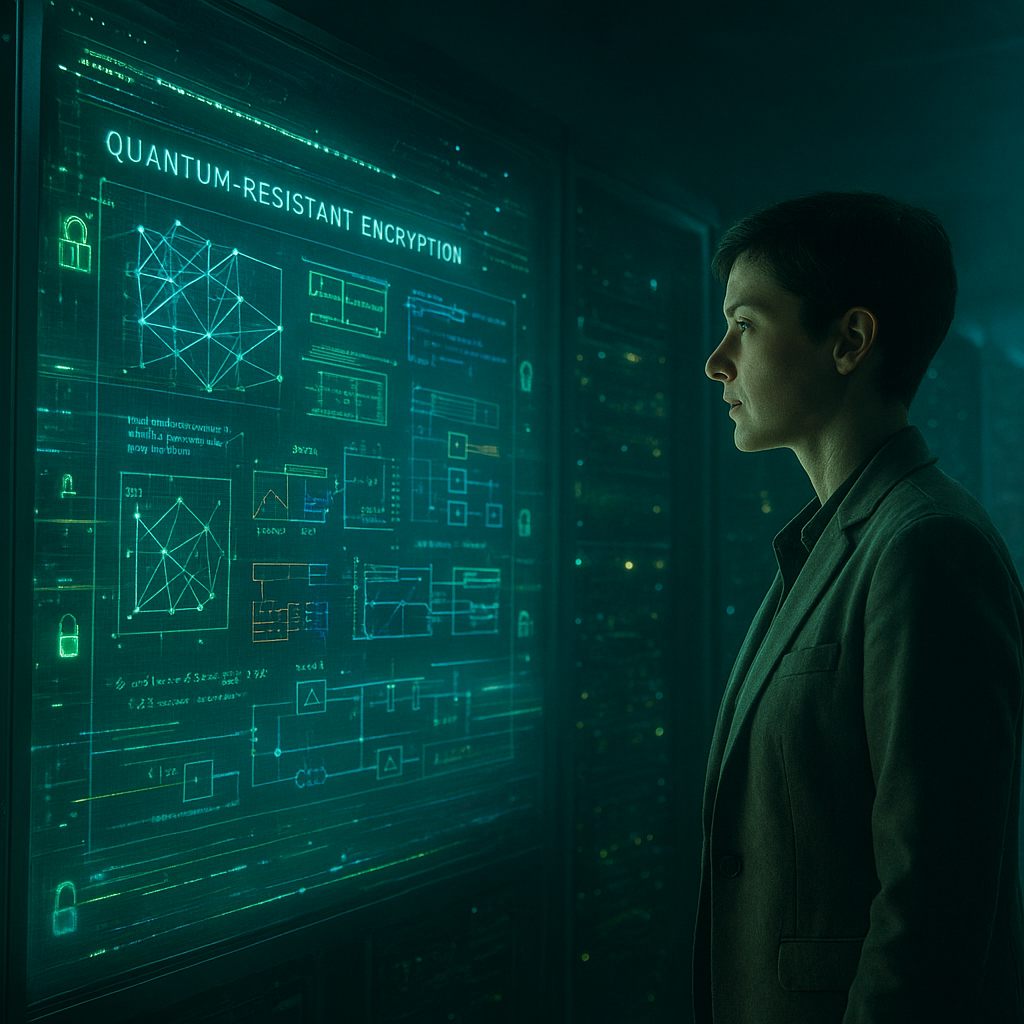
- Conduct a cryptographic inventory. Identify all systems using public-key cryptography, including TLS certificates, VPNs, code signing, and database encryption. Document key lengths, certificate expiration dates, and vendor dependencies.
- Prioritize data longevity. Classify information based on how long it must remain confidential. Data with sensitivity extending beyond 2030 requires immediate attention to quantum-resistant protection.
- Embrace crypto-agility. Design systems that can swap cryptographic algorithms without complete redesigns. This flexibility proves valuable as NIST standards evolve and vulnerabilities emerge.
- Monitor NIST guidance. The standardization process continues, with additional algorithms under evaluation. Stay informed about final standards and implementation timelines.
- Test hybrid approaches. Many organizations now implement hybrid classical-quantum encryption, combining proven algorithms with post-quantum candidates to ensure security against both current and future threats.
Budget planning should account for increased computational overhead and potential hardware upgrades. While cloud providers like AWS, Google Cloud, and Azure are beginning to offer post-quantum TLS options, on-premises infrastructure may require more extensive modification.
The Road Ahead: 2025 and Beyond
As we approach 2025, quantum computing cybersecurity has shifted from theoretical concern to operational priority. The first NIST post-quantum standards are finalized, with additional algorithms expected in coming years. Major technology companies are integrating quantum-resistant options into their products—Apple recently announced quantum-secure iMessage encryption, while Cloudflare has deployed post-quantum TLS across its network.
Yet challenges remain. Interoperability between different post-quantum implementations requires careful coordination. Performance optimization continues, particularly for resource-constrained environments. And the ultimate timeline for cryptographically relevant quantum computers remains uncertain, with credible estimates ranging from 2028 to 2040.
What’s certain is that organizations delaying preparation risk finding themselves vulnerable when quantum capabilities mature. The cryptographic transition ahead resembles the Y2K challenge in scope—widespread, technically complex, and unforgiving of procrastination. Unlike Y2K, however, the exact deadline remains unknown, creating dangerous ambiguity about urgency.
Conclusion
Quantum computing’s impact on modern cybersecurity represents both a genuine threat and a manageable challenge. The cryptographic foundations of digital commerce, secure communications, and data protection face eventual obsolescence, but the security community has responded with robust alternatives. Post-quantum cryptography offers practical defenses available today, while continued research addresses performance and implementation concerns.
Readiness requires acknowledging that quantum threats aren’t science fiction—they’re engineering problems demanding proactive solutions. Organizations that inventory their cryptographic dependencies, prioritize sensitive data protection, and begin migrating to quantum-resistant algorithms will navigate this transition successfully. Those waiting for quantum computers to actually break encryption may find that their most sensitive secrets, harvested years earlier, suddenly become readable. The time to prepare is now, while the quantum future remains tomorrow’s problem rather than today’s crisis.


